
Introduction
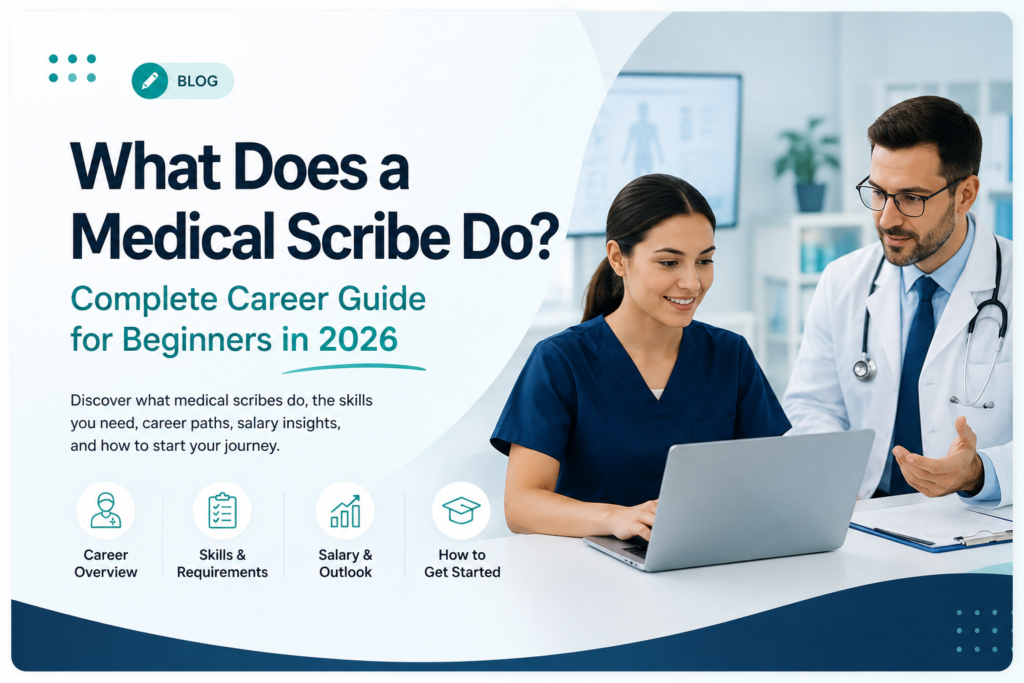
A medical scribe is one of the easiest ways to understand real healthcare work without directly treating patients. When a doctor talks to a patient, checks symptoms, explains findings, and plans treatment, the medical scribe documents the visit in the Electronic Health Record system.
For beginners, this role is useful because it helps you learn medical terms, patient visit flow, clinical documentation, and how doctors make decisions. If you are thinking about starting a healthcare support career in 2026, medical scribing can be a practical first step.
What Is a Medical Scribe?
A medical scribe is a healthcare documentation professional who supports doctors by writing patient visit notes. The scribe listens carefully during the appointment and records important details in the patient’s chart.These details may include the patient’s history, symptoms, physical exam findings, doctor’s assessment, treatment plan, and follow-up instructions.A medical scribe does not diagnose patients, give treatment, or replace the doctor. The main role is to make sure the medical note is clear, accurate, and complete.
What Does a Medical Scribe Do?
A medical scribe helps doctors save time by handling documentation during or after patient visits. This allows the doctor to focus more on the patient instead of spending too much time typing.A medical scribe usually:Records patient historyDocuments symptoms and complaintsWrites physical exam findingsUpdates Electronic Health RecordsPrepares charts before visitsAdds follow-up instructionsHelps organize clinical notes for doctor reviewFor example, if a patient visits for chest pain, the scribe may document when the pain started, where it is located, what makes it better or worse, related symptoms, exam findings, and the doctor’s plan.
Daily Responsibilities of a Medical Scribe
Documenting Physical Exam Findings
During the exam, the doctor may speak findings out loud. The scribe records those findings in the correct section of the chart. Accuracy is very important because future providers may also read these notes.
Updating EHR Notes
EHR means Electronic Health Record. It is the digital system where patient records are stored. A medical scribe must know how to enter information in the right place, such as history, exam, assessment, and plan.
Preparing Charts Before Visits
Before the doctor sees a patient, the scribe may review previous notes, test results, and visit history. This helps the doctor understand the patient’s background quickly.
Skills Required for Medical Scribing
Medical scribing is not only typing. It needs focus, accuracy, and basic healthcare understanding.
Important medical scribe skills include:
- Medical terminology: understanding common healthcare words
- Typing accuracy: writing correct information without mistakes
- Active listening: following doctor-patient conversations carefully
- Attention to detail: noticing small but important details
- EHR understanding: knowing how digital patient records work
- Privacy awareness: respecting patient information and confidentiality
- SOAP notes: understanding Subjective, Objective, Assessment, and Plan format
Beginners do not need to know everything on day one, but they should be willing to learn step by step.
Where Do Medical Scribes Work?
Medical scribes can work in different healthcare settings, such as:
- Hospitals
- Emergency departments
- Outpatient clinics
- Specialty clinics
- Telehealth or virtual healthcare settings
Some medical scribes may work remotely depending on employer needs, workflow, privacy requirements, and skill level. Remote scribing can be a good option, but it still requires discipline, accuracy, and a private workspace.
How to Become a Medical Scribe in 2026
If you want to become a medical scribe, follow a simple learning path:
- Learn basic medical terminology
- Understand how patient visits work
- Learn EHR documentation basics
- Practice SOAP notes
- Improve typing and listening skills
- Complete beginner-friendly medical scribe training
- Prepare your resume and apply for entry-level opportunities
The best approach is to build practical skills first instead of applying without understanding the role.
Medical Scribe Training for Beginners
Good medical scribe training should prepare beginners for real documentation work. It should not only explain theory but also show how patient notes are created.
A beginner-friendly training program should cover:
- Medical terminology
- Basic anatomy and common conditions
- HIPAA and patient privacy basics
- EHR documentation
- SOAP notes
- Clinical documentation practice
- Mock patient visit exercises
- Career preparation
If you want structured learning, you can explore the Medical Scribe Training Program at Healthcare Hustlers. The program is designed to help beginners build practical documentation skills step by step.
Remote Medical Scribe Jobs in 2026
Remote medical scribing means documenting patient visits from a private workspace instead of being physically present in a clinic. A remote scribe may listen to live patient visits through a secure system and update the chart in real time.
For remote scribing, you usually need:
- Laptop or computer
- Stable internet
- Headset
- Quiet private space
- Strong listening skills
- Good typing accuracy
- Patient privacy awareness
Remote work depends on skills, employer requirements, and experience. It should not be treated as a guaranteed option, but it is a growing area in healthcare documentation.
Medical Scribe Career Path
Medical scribing can help beginners understand healthcare workflow closely. It may also open the door to other healthcare documentation and administrative roles.
A simple career path may look like this:
Medical Scribe → Senior Scribe → Scribe Trainer → Clinical Documentation Specialist → Healthcare Documentation or RCM RolesSome learners later explore related fields such as Medical Billing, Medical Coding, Prior Authorization, or AR Follow-Up. These fields connect naturally with healthcare documentation and revenue cycle work.
Medical Scribe vs Medical Assistant
A medical scribe and a medical assistant both support healthcare teams, but their duties are different.
| Medical Scribe | Medical Assistant |
|---|
| Focuses on documentation | Supports clinical and admin tasks |
| Works with EHR notes | May check vitals or assist patients |
| Mostly typing and listening | More hands-on patient support |
| Remote option may be possible | Usually onsite |
If you like documentation, listening, and healthcare records, medical scribing may suit you better. If you prefer hands-on patient tasks, medical assisting may be a better fit.
Who Is Medical Scribing Good For?
Medical scribing can be a good option for:
- Medical students
- MBBS graduates
- NursesPharmacists
- Healthcare-background learners
- Beginners interested in healthcare careers
- People who like detailed work
- People comfortable with typing and listening
This role may not be ideal if you dislike careful listening, typing, medical notes, or working with detailed information.
Common Mistakes Beginners Should Avoid
Common Mistakes Beginners Should Avoid
Beginners should avoid these mistakes:
- Guessing medical terms
- Ignoring accuracy
- Writing incomplete notes
- Thinking it is only a typing job
- Ignoring patient privacy
- Applying without understanding clinical documentation
- Using difficult medical words without knowing their meaning
Accuracy matters more than speed in medical scribing.
FAQs
What does a medical scribe do?
A medical scribe documents patient visits in the Electronic Health Record system. The scribe records history, symptoms, exam findings, assessment, treatment plan, and follow-up details.
Do I need medical experience to become a medical scribe?
Medical background can help, but many beginners can start with proper training. Medical students, MBBS graduates, nurses, pharmacists, and motivated beginners can learn the role step by step.
Can medical scribes work from home?
Some medical scribes work remotely depending on employer needs, privacy rules, skills, and workflow. Remote scribing still requires accuracy, focus, and a private workspace.
What skills are needed for medical scribing?
Important skills include medical terminology, typing accuracy, active listening, attention to detail, EHR understanding, SOAP note writing, and privacy awareness.
How long does it take to learn medical scribing?
Learning time depends on the student’s background and practice. A structured beginner program can help learners understand the basics and start practicing documentation more confidently.
Is medical scribing a good career choice in 2026?
Medical scribing can be a good starting point for people who want to enter healthcare documentation, understand clinical workflow, and build practical healthcare support skills.
Conclusion
A medical scribe plays an important role in healthcare documentation. The job helps doctors save time and keeps patient records organized and accurate. For beginners, it is also a practical way to learn medical terminology, EHR systems, SOAP notes, and real patient visit flow.
If you enjoy listening carefully, typing accurately, and learning healthcare documentation, medical scribing can be a strong first step in your healthcare career journey.
Want to start learning medical scribing? Explore the Medical Scribe Training Program at Healthcare Hustlers and build practical healthcare documentation skills step by step.